


Samsung Galaxy Z Flip8: A Balanced Blend of Tradition and Innovation
Samsung has firmly established itself as a key player in the modern flip phone resurgence, a position it has maintained through a cautious yet effective approach to innovation. The Galaxy Z Flip8 represents perhaps the firm’s most measured effort yet. While some may label it as “boring,” the Flip8 refines the existing formula in several significant ways.
Having had an early glimpse of the Flip8 before Samsung’s Galaxy Unpacked reveal event, I found that while it lacks the fresh appeal of the Galaxy Z Fold8 or the premium hardware of the Galaxy Z Fold8 Ultra, it impressively enhances the utility of its outer display and continues to slim down each year.


A Thinner But Familiar Face
To detect the differences between the Galaxy Z Flip8 and its predecessor, the Z Flip7, one might need to break out a set of calipers or have an eye tuned to Samsung’s specific color schemes. The overall aesthetic remains largely unchanged; however, the company has managed to shave off a few tenths of a millimeter. The Flip8 now measures 6.1mm thick when opened (excluding the camera lenses), down from 6.5mm, and it weighs a lighter 180g—an impressive feat for a foldable device.
This device retains its sharp design, characterized by angular edges and smooth surfaces, but fails to introduce anything vastly different from last year. Samsung’s signature ‘Armor Aluminum’ frame and a new high-strength material for the hinge are included, although the two elements feel similar in use. The Flip8 still offers clamshell-specific features like Flex Cam and split view, and it closes with a satisfying snap, making it even easier to stow away in a pocket.
The color palette this year, however, feels more subdued. Options like Graphite, Cream, and Pink may not evoke the vibrant impression of last year’s Blue Shadow; even the exclusive Mint model is notably understated.
Finally, a Usable Outer Display
The screen specifications remain consistent, featuring a 4.1-inch AMOLED display on the exterior and a 6.9-inch, 21:9 aspect ratio panel inside—both bright, high resolution, and swift in refresh rate. However, it’s the newfound functionality of the outer screen that could redefine user interactions.
In earlier Flip models, the outer display was mainly a widget viewer, often frustrating users as Samsung required them to navigate menus or download specific modules to access app functionalities. With the Flip8, users can finally access full versions of Samsung’s photo gallery and web browser, along with an app drawer and recent apps menu. It offers notifications and quick settings as well, allowing extensive usability without having to flip the device open.
This substantial upgrade may alter how users interact with flip phones, echoing the user experiences offered by newer iterations of Motorola’s Razr, which have long provided full app compatibility on their outer screens.
Samsung has integrated AI into this upgrade as well; features like Now Nudge and Now Brief have received enhancements to better utilize the outer display. While their effectiveness remains to be truly evaluated, their inclusion indicates a push towards smarter usage.
Phone Photographers Won’t Be Thrilled

Examining the specifications reveals similarities to last year’s model, featuring an Exynos 2600 chip, which while a generation newer than the Flip7’s processor, didn’t impress much during my brief experience with it in the Galaxy S26. Traditionally, the Flip series has prioritized accessibility over raw power, with high-performance options reserved for the Galaxy Fold and Ultra models. The Flip8 felt responsive enough during my examination, supported by 12GB of RAM and a standard base storage option of 256GB, alongside a 512GB variant for heavy users. This should be adequate for daily use.
The 4300mAh battery is relatively small compared to conventional flagships, but should comfortably last through a day of moderate usage. That said, unless Samsung has performed software miracles, Motorola’s Razr 70 Ultra—which boasts a larger battery—may outperform in longevity.
Camera enthusiasts may find less to rejoice about, as the Flip8 retains the same 50MP main and 12MP ultrawide sensors seen in the Z Flip7. While these are adequate and previously earned accolades over Motorola in direct comparisons, it remains to be seen if the new Razr 70 Ultra’s advanced optics will set a new standard for low-light performance. Samsung, however, is known for its consistent image processing. A new addition in the realm of video capabilities is the horizon lock stabilization feature for Flex Cam, a relatively minor yet meaningful upgrade.
Samsung Galaxy Z Flip8 Initial Verdict
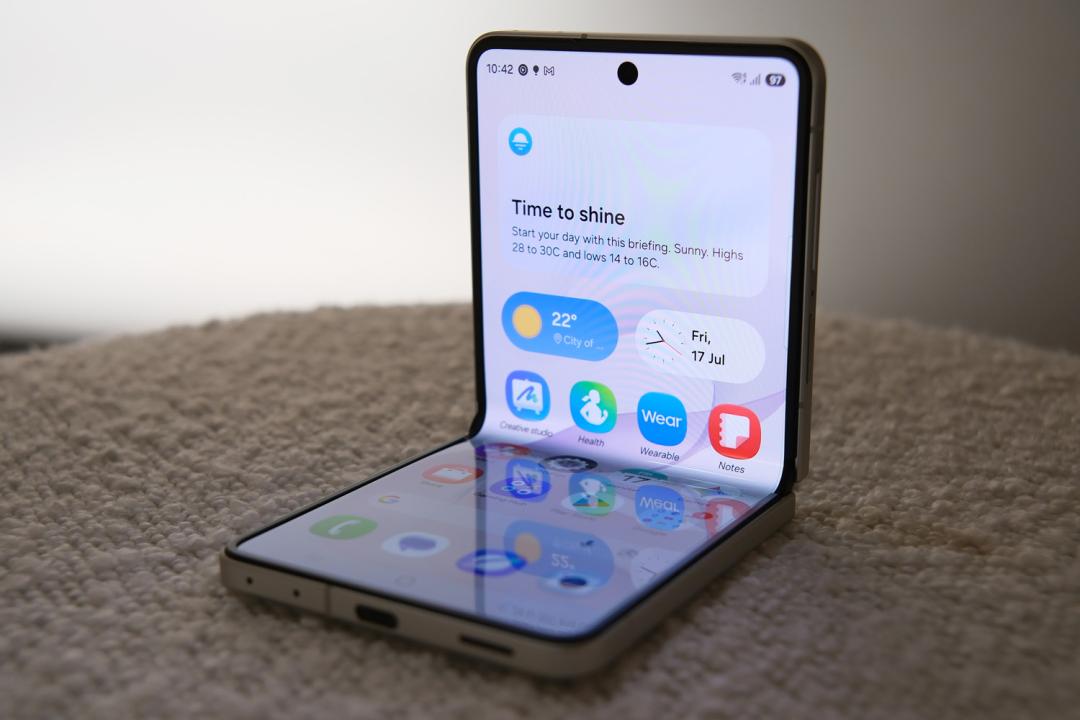
If the rumors hold true and this is indeed Samsung’s last clamshell-style offering, it would be a significant loss. At first glance, the Galaxy Z Flip8 appears to finally leverage its outer display effectively while maintaining the clean, minimalist design and specification set that previously made it a favored option for those venturing into foldable technology.
The discrete reduction in thickness and weight is a welcome enhancement, alongside the notably sturdier hinge. Nevertheless, such minimal alterations in hardware across the board, compared with a higher starting price point, are hard to reconcile. Although the higher costs cannot be solely attributed to Samsung—ongoing component price challenges afflict the industry—the leap to $1199/£1149 is a considerable increase from the Flip when it served as an appealing alternative to the traditional Galaxy S. Comparatively, the Motorola Razr 70 Ultra carries an even steeper price tag.
Fans of foldable devices might consider stepping up to the new passport-sized Z Fold8 for a more significant upgrade. However, for those set on the charms of clamshell phones, the Galaxy Z Flip8 still appears to be a solid choice.
For a deeper dive and further insights, check out the source article Here.
Image Credit: www.stuff.tv


