


A New Contender in the Gaming PC Arena: Meta PCs’ Steamroller
As Valve’s Steam Machine officially begins shipping, there’s a surge of interest in gaming PCs—alternatives are becoming increasingly appealing for those who either missed the boat on Valve’s latest hardware or seek different features. One of the latest entries in this growing market is the Steamroller from Meta PCs, a US-based manufacturer known for its high-performance builds.
The Steamroller is built around an AMD Ryzen 9600X processor, featuring 16GB of DDR5 RAM and a Radeon RX 7600 graphics card with 8GB of video RAM. A 1TB NVMe SSD serves as storage, and all this is housed in a micro-ATX case called the Jonsbo D32, which includes a 240mm AIO liquid cooler and a gold-rated 650W power supply. Priced at $1,299, preorders are now open, with units expected to ship from July 7. However, it is crucial to assess how well it competes against Valve’s design in key areas.


1. Living Room Suitability
(Image credit: Valve)
In evaluating the aesthetic appeal, Valve has successfully crafted the Steam Machine as a compact, unobtrusive cube—ideal for blending in with living room furniture. In contrast, the Steamroller, with dimensions of 207 x 395 x 314mm, represents a more traditional PC form factor. While undeniably smaller compared to conventional gaming rigs, it still lacks the subtlety of Valve’s creation.
2. Thermal Management
(Image credit: Valve)
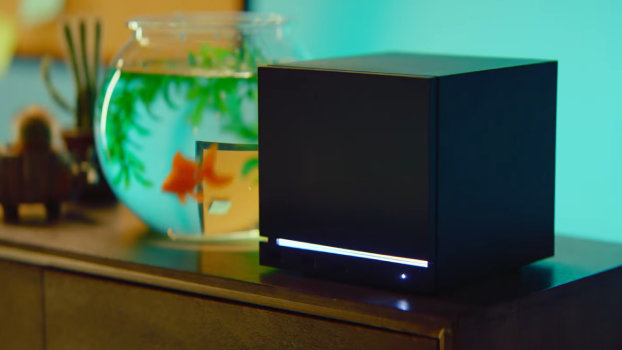
Valve has taken thermal management seriously, especially considering the cramped confines of typical living room setups. The Steam Machine’s design accounts for airflow and heat dispersion, ensuring it operates efficiently even in restricted spaces. Unfortunately, most micro-ATX cases like the Jonsbo D32 may not have the same degree of design consideration for heat management.
3. Noise Levels
(Image credit: Valve)
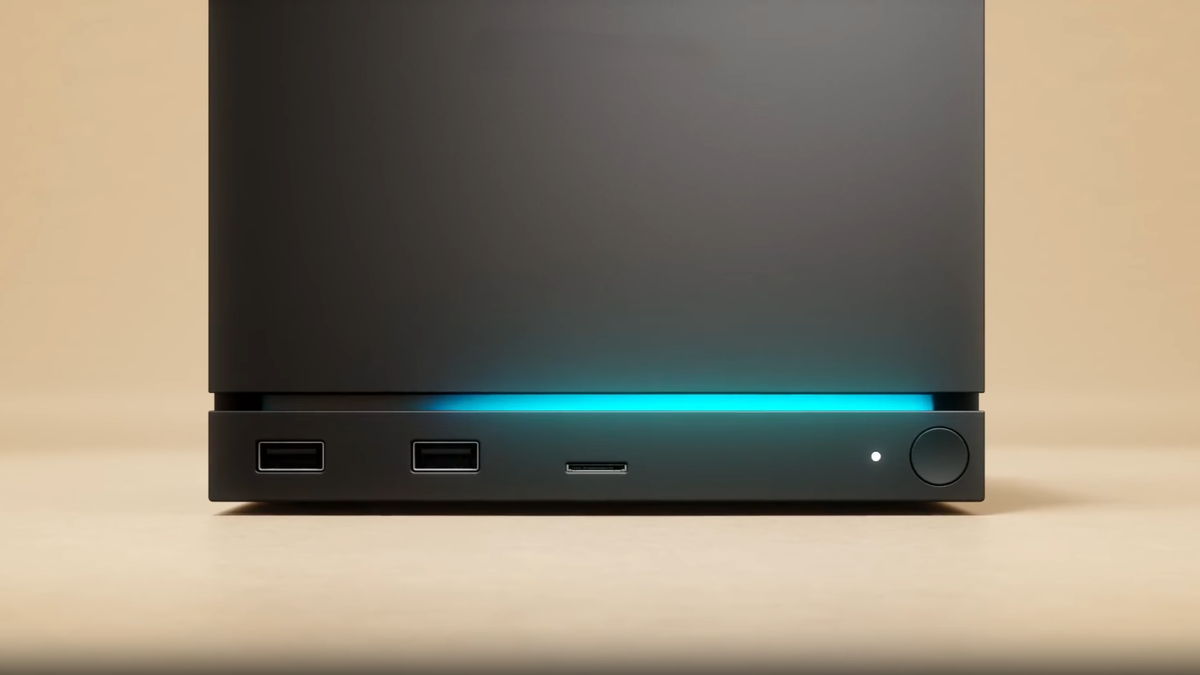
Many gamers prioritize noise levels, and the Steam Machine has consistently been praised for its quiet operation, often outperforming traditional gaming consoles. This is a crucial aspect for living room setups, where even slight fan noise could disrupt the gaming experience. In contrast, the Steamroller’s potential noise output remains uncertain, especially under heavy gaming loads.
4. Console-Like Experience

(Image credit: Shutterstock / Mohsen Vaziri)
An essential feature that distinguishes the Steam Machine is its focus on creating a seamless user experience akin to that of consoles. This includes easier instant wake functionality, HDMI CEC support for volume adjustments using a TV remote, and other conveniences that allow for quick gaming sessions. Unfortunately, such features are absent in the Steamroller and similar prebuilt PCs, potentially forgoing the quick accessibility that many casual gamers desire.
Highlighting Strengths of the Steamroller
While the Steamroller and its competitors may fall short in some aspects compared to the Steam Machine, they do offer notable advantages. For instance, with its desktop-class GPU, the Steamroller promises superior gaming performance, especially for graphically demanding titles. Furthermore, it offers more room for upgrades, which can be a significant draw for those looking to maintain and enhance their gaming rig over time.
Nonetheless, the core purpose of the Steam Machine was to redefine living-room gaming experiences by integrating seamlessly into home entertainment systems. The Steamroller, despite its advantages, may not adequately cater to this need. In the end, while alternatives bring their own benefits, they often miss key components that made Valve’s Steam Machine uniquely effective for casual and home-based gaming.
For further insights and details, you can check out the full article here.
Image Credit: www.techradar.com


