


Testing Performance with Our 5K Setup
Our 5K Test System showcases some of the best components available for gamers and professionals alike. Below are the key specifications of our setup:
Motherboard: Asus TUF Gaming B550M-Plus WiFi II
Processor: AMD Ryzen 7 5700X3D
CPU Cooler: Thermalright Frozen Prism240 Liquid Cooler
GPU: Asus TUF GeForce RTX 4080 Super OC
Storage: 1TB Samsung 980, 4TB Lexar NM790
Case: Lian Li A3 m-ATX
RAM: Corsair Vengeance 32GB (16×2) DDR4
PSU: Seasonic 750W
Monitor: LG 39GX950B-B


In terms of visual experiences, Control Resonant has garnered a reputation for pushing the limits of graphics, turning heads with its stunning visuals powered by Nvidia’s path tracing technology. Developed by Remedy Entertainment, the game is known for its psychedelic imagery and immersive atmosphere, and its sequel certainly doesn’t disappoint.
Recently, I put our setup to the test by playing Control Resonant on the LG 39-inch 5K2K OLED monitor. The experience was nothing short of breathtaking, with a noticeable improvement in detail, although it did warm up my GPU significantly. With a resolution of 5120 x 2160 at a 21:9 aspect ratio, this monitor delivers 33% more pixels than a standard 4K monitor, making it a serious challenge for GPUs.
The good news? Despite the heavy demands on the RTX 4080 Super, the frame rates were surprisingly stable, remaining in the range of the high 50s to low 60s.
Control Resonant with path tracing enabled (Image credit: Remedy Entertainment)
Performance Insights with DLSS and Path Tracing
With DLSS 4.5 Quality and Frame Generation enabled, I observed that performance remained quite consistent between high 50fps to low 60fps. This is commendable given the 5K2K resolution, which demands a lot of processing power. By switching to DLSS Performance mode, the frame rates were boosted to the high 80s, allowing for smooth gameplay even during intense combat scenarios.
The impact of ray tracing on visuals cannot be understated. The allocation of graphics settings, particularly for gamers using lower-tier GPUs, can significantly affect their experience. Leveraging standard ray tracing still delivered stunning graphics, especially in scenes dominated by dynamic lighting effects associated with the Hiss—the game’s corrupting force.
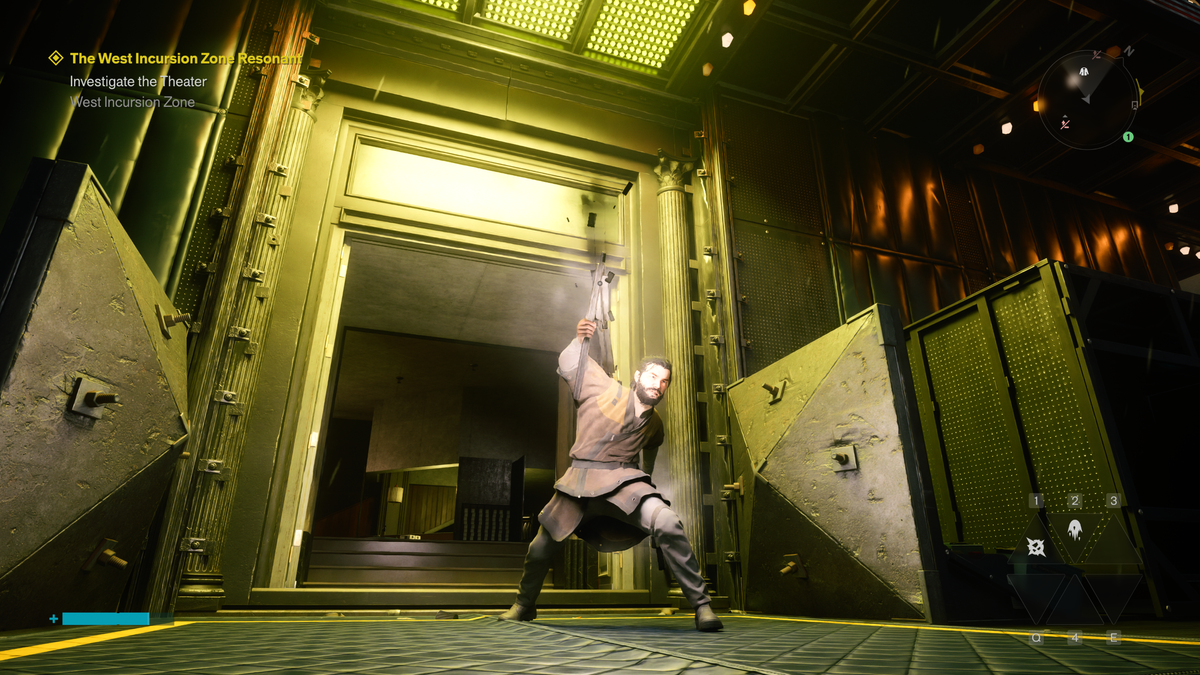
(Image credit: Remedy Entertainment)
Ultimately, path tracing stands out as the crown jewel of graphical tech in games today. Engaging path tracing took my GPU temperatures nearing 80C, but this is expected with the level of detail being rendered at a 5K2K resolution.
Remarkably, with DLSS Performance and Frame Generation enabled, I maintained a comfortable 60fps in most scenarios, dipping slightly during combat or traversal. This aligns well with Remedy’s stated system requirements, positioning the RTX 4080 Super quite closely to the performance levels of the RTX 5080, which is necessary for a smooth experience at such high resolutions.
Real-World Considerations for Gamers
However, a system like this is not accessible for all gamers, costing around $3,000 / £3,000 or more, depending on chosen components. The LG monitor alone retails at approximately $1,799.99 / £1,499 (discounted). For those looking to save, options like the Alienware AW3926QW 5K2K may prove to be a more budget-friendly alternative.
While the RTX 4000 series is currently discontinued, finding a comparable GPU such as the RTX 5070 Ti or RTX 5080 will still require a significant investment, often exceeding $800 for viable choices. These costs add up, making a comprehensive new build a major financial commitment.
For players exploring alternative gaming solutions, handheld consoles like the Lenovo Legion Go S Z1 Extreme present themselves as more budget-friendly options. Testing Control Resonant on this device yielded respectable results, running at 40fps on the handheld preset and even achieving 70fps when lowering the resolution to 900p and enabling FSR Balanced with frame generation.
In summary, while pushing Control Resonant at 5K2K offers a jaw-dropping gaming experience, the requirements for achieving it are substantial. The improvements in visual fidelity and immersion left me impressed and eager for future advancements in gaming technology.
For more details on this testing experience, check out the original article from Here.
Image Credit: www.techradar.com


