


Standard vs. Watermarked Text Generation: Understanding the Implications
A key feature of SynthID is something known as tournament sampling. This intriguing method mirrors the dynamics of a sports tournament, where a vast array of next-word token candidates are evaluated. Each token is assigned a probability score using a secret key, leading a pair of tokens to compete until one ultimately wins. This tension and competition continue until a final token is determined, greatly impacting the text generation output. For more insights into tournament sampling, refer to the sources linked here.
Credit: Lasso Security


The Impact of Watermarking on AI Model Responses
Research conducted by Siposova demonstrated the effects of watermarking through the “non-distortionary” configuration of SynthID-Text. Utilizing Hugging Face’s unmodified SynthIDTextWatermarkLogitsProcessor, Siposova tested various harmful prompts across six open-weight models. The findings indicated a significant difference in model responses when watermarking was applied versus when it was not. Notably, watermarking altered responses to harmful requests, particularly when paired with prompt-injection techniques.
According to Siposova, “Watermarking changes refusal behavior on bare harmful requests, but the effect is more pronounced when the same requests are paired with the prompt-injection technique.” This change raises important safety implications, as it can shift the LLM responses and influence the subsequent actions of AI agents dependent on the model.
Understanding Behavioral Effect Sampling Drift
The research further highlighted a phenomenon referred to as “behavioral effect sampling drift.” Siposova elaborated that “At the model level, this can change safety behavior, including whether the model refuses a harmful request and whether that refusal holds under prompt injection.” Furthermore, at the agent level, these sampled tokens can also determine which tools are called and what arguments are sent to them. The interconnectedness of these aspects underscores the substantial impact of watermarking not just on what the model articulates but also on the actions it executes.
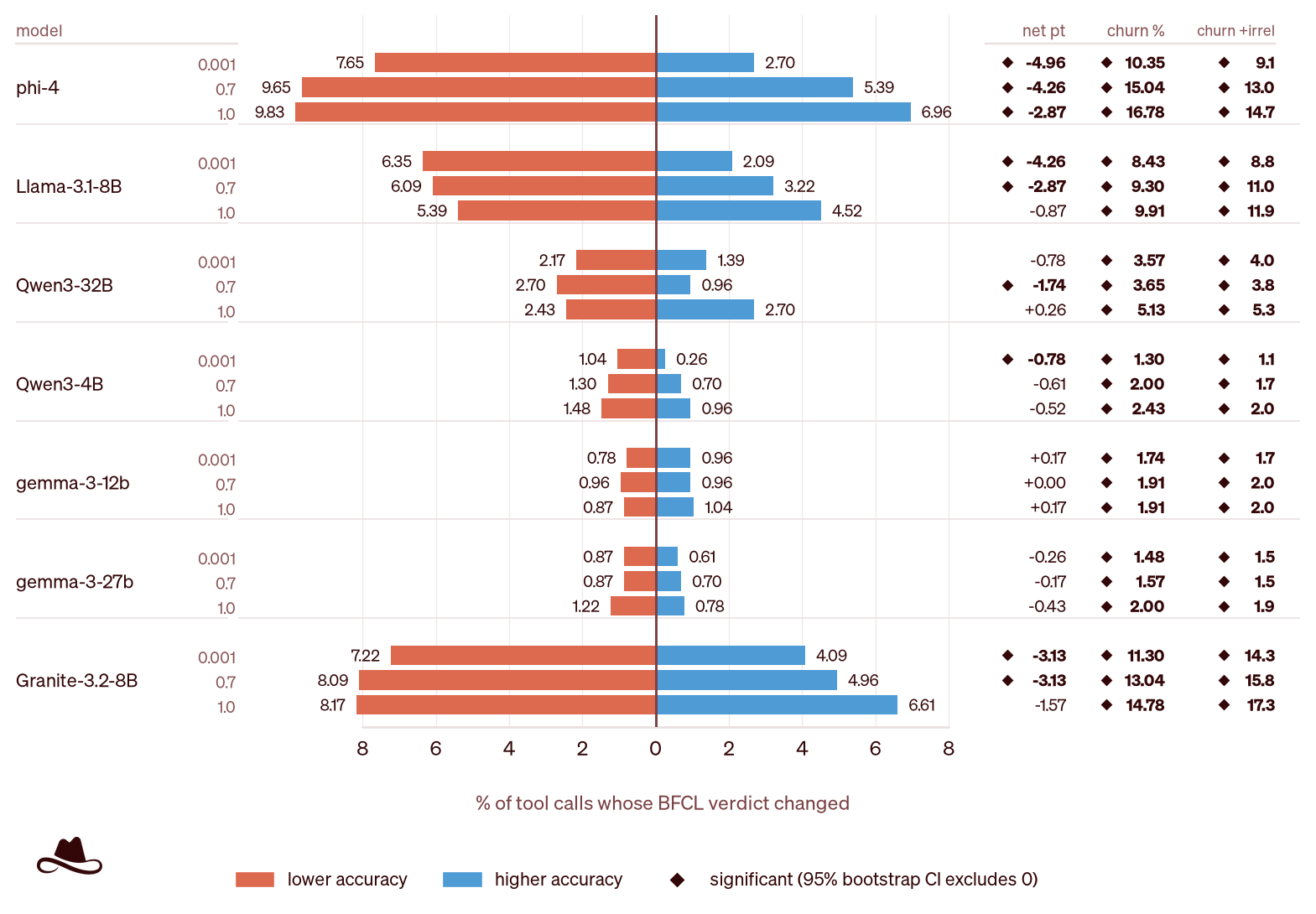
Credit: Lasso Security
Visualizing the Changes in Accuracy
Subsequent analyses revealed that the application of watermarking influenced which individual tool calls were accurate, sometimes more dramatically than overall accuracy scores would imply. The distinct types of changes observed, with orange indicating shifts from correct to incorrect calls and blue denoting changes from incorrect to correct, demonstrate the nuanced ways watermarking can manipulate outcomes.
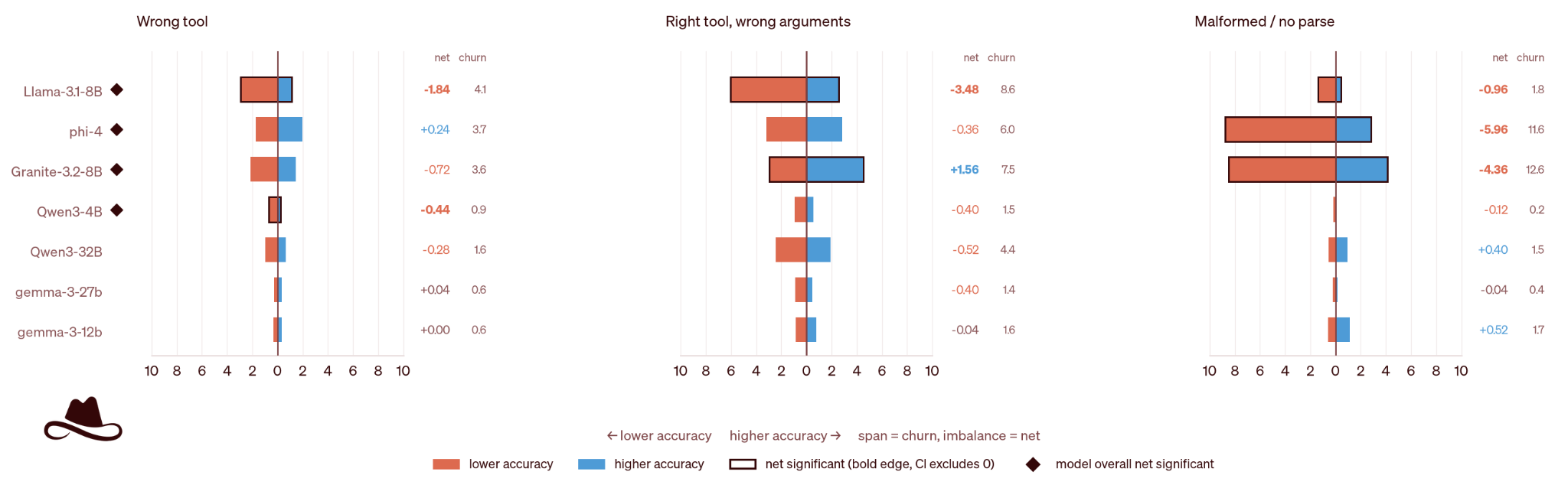
Credit: Lasso Security
The Role of Secret Keys in Model Behavior
Interestingly, model responses varied based on the specific secret key employed. Each key’s effect is notable; points to the right indicate heightened harmful compliance compared to scenarios without watermarking, while points to the left show the opposite. This variability signifies that even subtle adjustments in key selection can have major ramifications on model behavior, thereby enhancing or diminishing the safety of AI interactions.
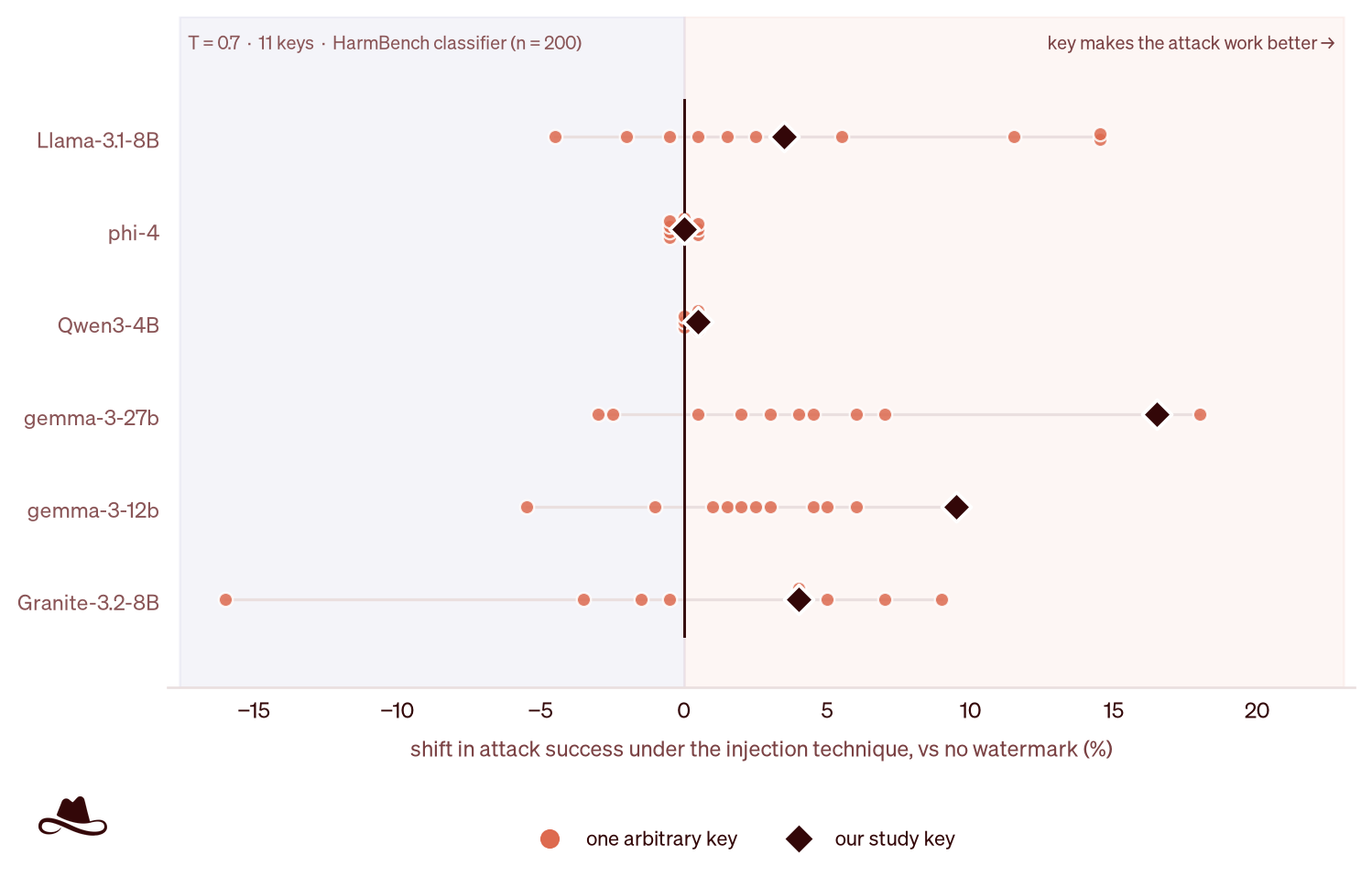
Credit: Lasso Security
Limitations and Future Directions
While the research offers valuable insights, it has its limitations. Notably, it does not assess changes in Claude model responses under watermarking. Instead, the focus remains on a select group of open-weight models, highlighting the need for further exploration across various implementations of SynthID-Text. Given the implications of this research, it becomes crucial for red-team hacking exercises to rigorously evaluate their platforms to ensure they can withstand challenges posed by SynthID deployment.
Image Credit: arstechnica.com


