


Lenovo is developing quite the reputation for showcasing innovative (and sometimes strange) product concepts at major tech events. At MWC 2026, the company continues this tradition, leaving attendees impressed not only by the revealed products but also by the unmentioned ideas.
Product concepts are prototypes that illustrate exciting new ideas, hinting at what future gadgets could look and perform like. While these prototypes are not available for purchase, the technologies displayed often find their way into consumer products, raising anticipation for their eventual release.


ThinkBook Modular AI PC Concept
(Image credit: Future)
During my visit to MWC, I was fascinated by the ThinkBook Modular AI PC Concept, which looks deceptively similar to a standard laptop at first glance. The key feature lies in its dual-screen design—one on the front and one removable screen on the back that can function as a portable second monitor.
This rear screen is easily detached thanks to a magnetic connector, and users can connect it via a cable. Furthermore, users can also swap the keyboard with this second screen, allowing for greater flexibility, as the keyboard can operate wirelessly via Bluetooth.
Moreover, the laptop features modular input/output ports on both sides, which can be interchanged to accommodate USB-C, USB-A, and HDMI connections. This thoughtful design aspect enhances the laptop’s adaptability, making it more user-friendly and convenient.
Yoga Book Pro 3D Concept

(Image credit: Lenovo)
Next was the Yoga Book Pro 3D Concept, reviving the trend of 3D technology but targeting specific user groups such as makers and 3D artists. This dual-screen laptop allows for glasses-free 3D viewing on the main screen, optimized through eye-tracking capability in the webcam.
The secondary screen serves as a vibrant touchscreen that functions like a graphics tablet, enabling real-time design edits. Additionally, users can manipulate 3D objects on the screen through hand gestures captured by the webcam, facilitating a more interactive design process.
Legion Go Fold Concept
(Image credit: Future)
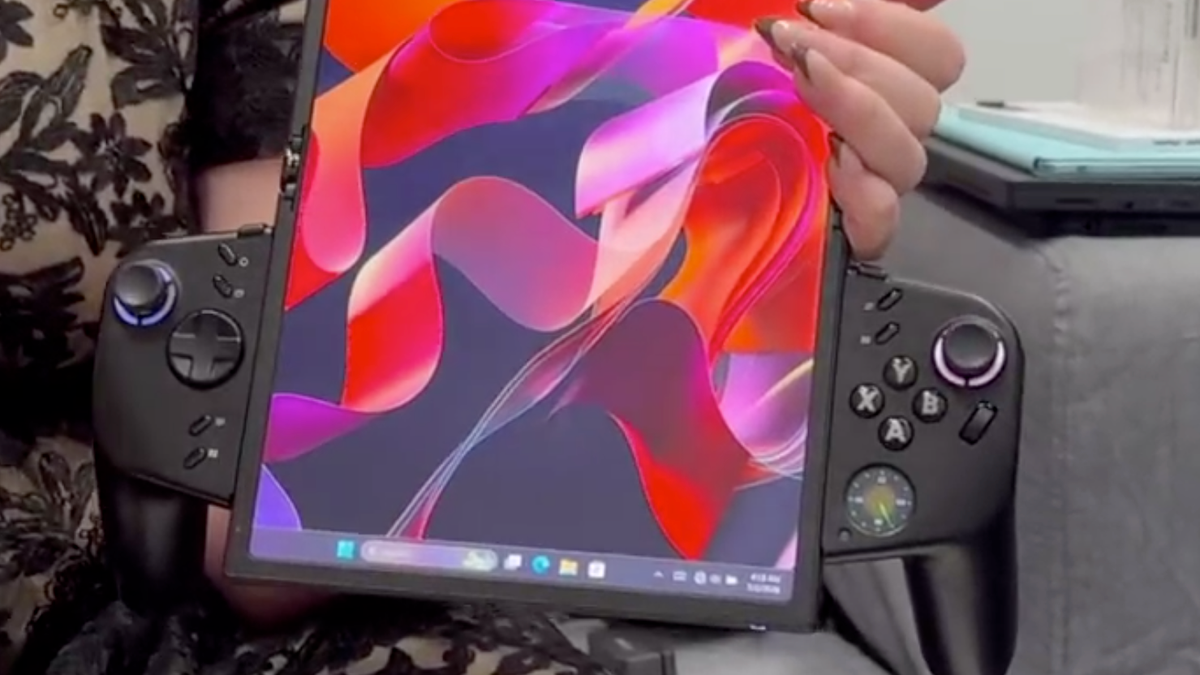
Another intriguing prototype is the Legion Go Fold Concept, designed as a large gaming tablet. This device boasts a 7.7-inch screen that expands to 11.6 inches, allowing users to attach detachable controllers, similar to the Nintendo Switch.
In “Horizon” mode, gamers can enjoy a larger display while maintaining the handheld experience. Alternatively, users can switch to a vertical layout to enable split-screen functionality, allowing for multitasking while gaming.
AI MIA
One notable aspect during Lenovo’s showcase was the absence of a heavy focus on artificial intelligence (AI). Despite AI buzz pervading MWC 2026, Lenovo opted for a more hardware-centric approach, illustrating a refreshing departure from the trend. This focus on tangible technology makes for a more exciting and authentic vision of the future.
As showcased at MWC 2026, Lenovo’s bold and innovative concepts leave much to contemplate for the future of laptops. While many companies are pushing for AI as the future of technology, Lenovo’s emphasis on physical hardware signals a different, yet equally important, evolution in the tech landscape.
For more insights and detailed information, click here.
Image Credit: www.techradar.com


