


GPU Prices Surge Due to RAM Crisis: A 2026 Perspective
As we step into 2026, the anticipated price hikes for graphics cards, particularly the Nvidia GeForce RTX 5090 and AMD Radeon GPUs, have proven to be a grim reality for PC gamers. According to reports from TechRadar, the RTX 5090 is now seeing prices reach unprecedented levels, with offerings nearing $4,000 across many retailers.
The MSRP for Nvidia’s Founders Edition currently remains at $1,999 / £1,799 / AU$4,039, indicating that these steep price increases are coming from retailers and private sellers rather than the manufacturer itself.


Impact of AI on GPU Pricing
Recent fluctuations in RAM pricing have closely paralleled the rise of AI technologies, significantly affecting the cost of GPUs. As demand for RAM—critical for AI training and operation—has surged, prices have risen, leading to cascade effects on the graphics card market. A notable instance includes Best Buy’s listing of the Asus ROG Astral RTX 5090 at an eye-watering $3,610.78, effectively doubling the Founders Edition’s MSRP.
This price increase trend isn’t isolated to Nvidia; AMD’s Radeon RX 9070 XT GPUs are facing similar pricing challenges, with models like the XFX Mercury Radeon RX 9070 XT OC Edition increasing to $849.99 from its original $599 retail price.
Market Responses and Predictions
While Nvidia and AMD have yet to announce any direct price hikes, speculation looms that we might see further increases. Recent rumors suggest Nvidia could consider raising the RTX 5090’s MSRP to $5,000, although such claims remain unverified.
The draw of AI technology leaves consumers feeling the pinch, as rising RAM costs effectively play a pivotal role in shaping market dynamics for GPUs and other PC components. Without RAM, the basic function of a computer drags to a halt, thus amplifying the relevance of this issue for all PC users.
The Future of High-End Gaming
As the AI landscape continues to evolve, implications for PC hardware prices could set a worrying precedent for gamers. For those looking to invest in high-performance gaming rigs this year, acting sooner rather than later might be prudent, given that prices show no signs of stabilizing in the near future.
The holistic impact of AI and the increased demand for hardware components creates a precarious situation for both seasoned gamers and newcomers to the PC gaming scene. Therefore, stakeholders are encouraged to stay informed and vigilant.
In summary, while Nvidia isn’t solely responsible for these price hikes, it is amid a broader shift in the tech industry driven by AI’s growing prevalence in various sectors.
For more in-depth analysis and expert opinions, check out the full article here.
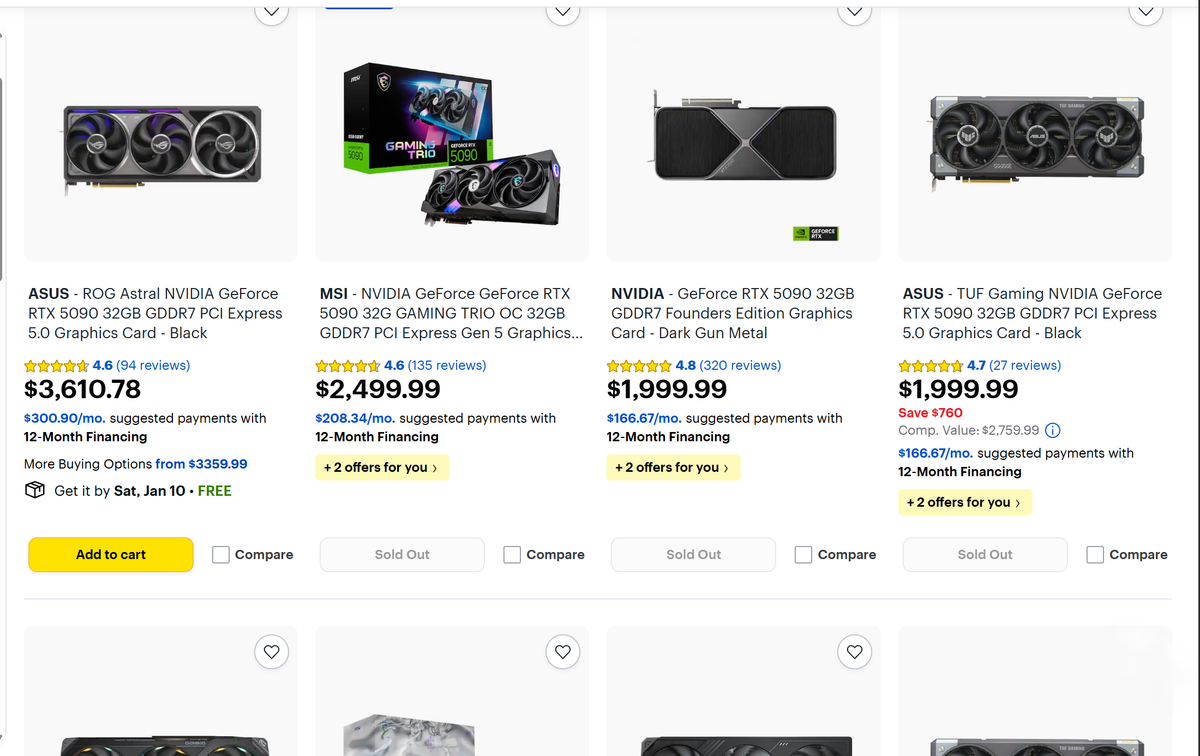
(Image credit: Best Buy)
Image Credit: www.techradar.com


