


How the Steam Deck Revolutionized Handheld Gaming
It’s fairly well known that the source behind the success of handheld gaming PCs in the past few years is Valve’s Steam Deck. After launching in 2022, it became a massive hit due to its affordability, making it one of the easiest and most inexpensive ways to enjoy PC gaming.
SteamOS plays a crucial role in its appeal, offering a streamlined, console-like user interface that allows gamers to dive straight into their titles without the need for complex configurations. Priced at $399 / £349 / AU$649, the Steam Deck arguably stands as the best handheld gaming device on the market, delivering enjoyable gaming experiences while maintaining reasonable performance for many gamers.


The Increasing Costs of Handheld Gaming PCs
While it may be unrealistic to expect significantly more powerful hardware at the same price point as the Steam Deck, the reality remains that handheld gaming PCs are becoming increasingly expensive, particularly from established brands like MSI, Asus, and Lenovo.
It’s not as if high-priced handhelds are a recent phenomenon; prior to the Steam Deck, devices in the market often exceeded the $1,000 mark. However, the resurgence of handhelds can largely be attributed to the Steam Deck’s price and its ability to deliver solid performance across a range of Steam games.
Some might argue that the rising prices are justified due to enhanced hardware capabilities. While this may hold some truth, the disparity in performance between models like the Asus ROG Ally Z1 Extreme and the MSI Claw 8 AI+ does not justify the latter’s steep retail price.
The MSI Claw 8 AI+ and MSI Claw A8: A Case Study in Overpricing
(Image credit: MSI)
Despite my enthusiasm for the MSI Claw 8 AI+, which I will review shortly, the price differential between it and devices like the Asus ROG Ally is perplexing. The performance enhancements from the ROG Ally are indeed significant, and its battery life is commendable. However, the leap from $649 / £599 / AU$1,299 to a staggering $899 / £899 / AU$1,799 for the Claw 8 AI+—which has risen to $999 in the U.S.—is hard to justify. Furthermore, the Claw A8, featuring AMD’s Ryzen Z2 Extreme processor, is similarly priced but may not offer competitive performance.
Moreover, the accessibility issue compounds the problem. Many of these handhelds are not readily available in various regions—this may be due to recent tariff complications, but consumers are unlikely to be sympathetic to such explanations.
One potential remedy could be introducing more affordable alternatives. Although MSI has launched the Claw 7 AI+, which uses the same Intel Core Ultra 7 258V processor as the Claw 8 AI+—albeit with a smaller 7-inch screen and a 54.5 WHr battery—its retail price of $799.99 remains high. Finding this device in the UK has proven challenging, and in the U.S., its price has inexplicably risen to $899.
Emerging Trends in Handheld Gaming Pricing
(Image credit: Future)
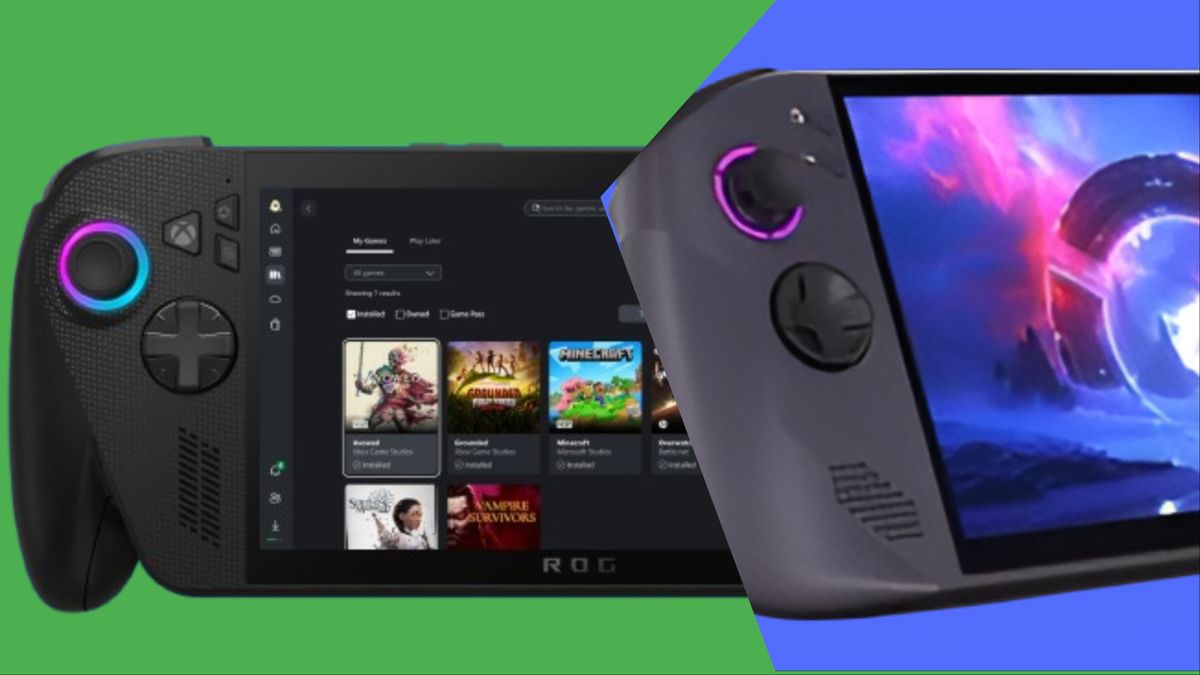
Additionally, rumors surrounding the upcoming ROG Xbox Ally suggest that its pricing could also range between $800 and $1,000, depending on the configuration. The Asus ROG Ally X has witnessed a similar trend, with a notable price increase to $799.99 / £799 / AU$1,599, now retailing at $899 at Best Buy.
The price hike isn’t unique to Asus; the Lenovo Legion Go S Z1 Extreme has become increasingly elusive, with scarce listings—one of the few at Best Buy currently priced at $829.99. This pricing pattern poses serious concerns for the future of handheld PC gaming.
The Future of Affordable Handheld Gaming
As we move forward, it appears that Valve’s successful model of maintaining affordable options in handheld gaming is fading. If current trends continue, we may well see handheld gaming revert to its erstwhile niche status. While some gamers may be willing to invest in pricier models for enhanced performance, the longevity of this market segment could be jeopardized, given that the majority of gamers cannot afford such premium devices.
For a more in-depth look into the evolving landscape of handheld gaming PCs, you can explore the full article here.
Image Credit: www.techradar.com


