


The Evolution of Gaming PCs: A Journey from 2017 to 2026
In 2016, as a fourteen-year-old enthusiast, I attended the Gadget Show Live in the UK, captivated by the latest technological marvels on display. I overheard someone on a stand mention they had spent £1,000 on a custom gaming PC. At the time, this figure — roughly $1,400 — seemed staggering. I had no frame of reference for what that amount could acquire in terms of computing power.
Fast forward to 2017, and £1,000 would have bought an upper mid-range system. For a top-tier setup featuring Intel’s Core i7-7700K processor and an Nvidia GeForce GTX 1080, one would need to budget around £1,700, VAT included. Nvidia further upped the ante with the GTX 1080 Ti, which became the gold standard for serious gamers.


(Image credit: Future)
Remarkably, by 2026, that same amount of money correlates to just a flagship graphics card. Nvidia’s RTX 5090 is expected to retail at approximately £1,799, far exceeding the cost of a complete system from just nine years prior. The GTX 1080 Ti, once a consumer’s lofty aspiration, is now positioned as cheaper than many mid-range graphics cards of today.
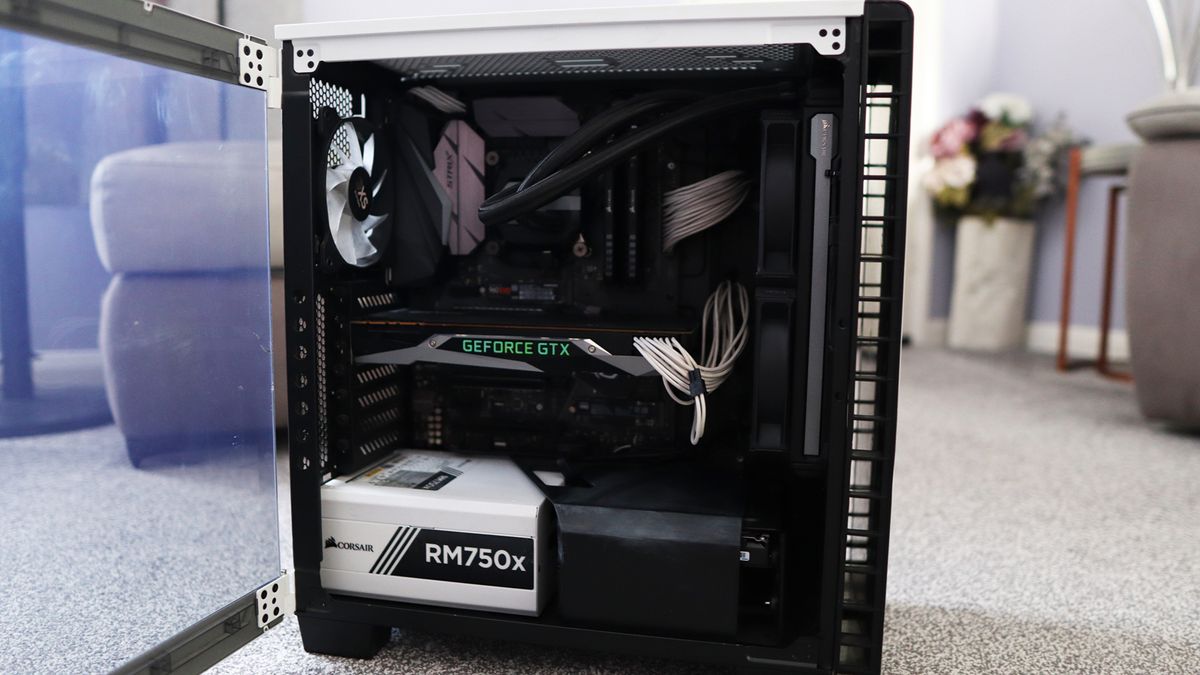
Here’s a breakdown of what £1,700 bought you back in 2017:
- CPU: Intel Core i7-7700K
- Cooler: Corsair 240mm AIO
- GPU: Nvidia GTX 1080 Ti Founder’s Edition
- RAM: Corsair Vengeance LED 16GB DDR4-3000
- SSD: Samsung 960 Evo 250GB SSD
- Motherboard: Asus ROG Strix Z270F Gaming
- PSU: Corsair RM750x 750W White
- Case: Corsair Carbide 400C in white
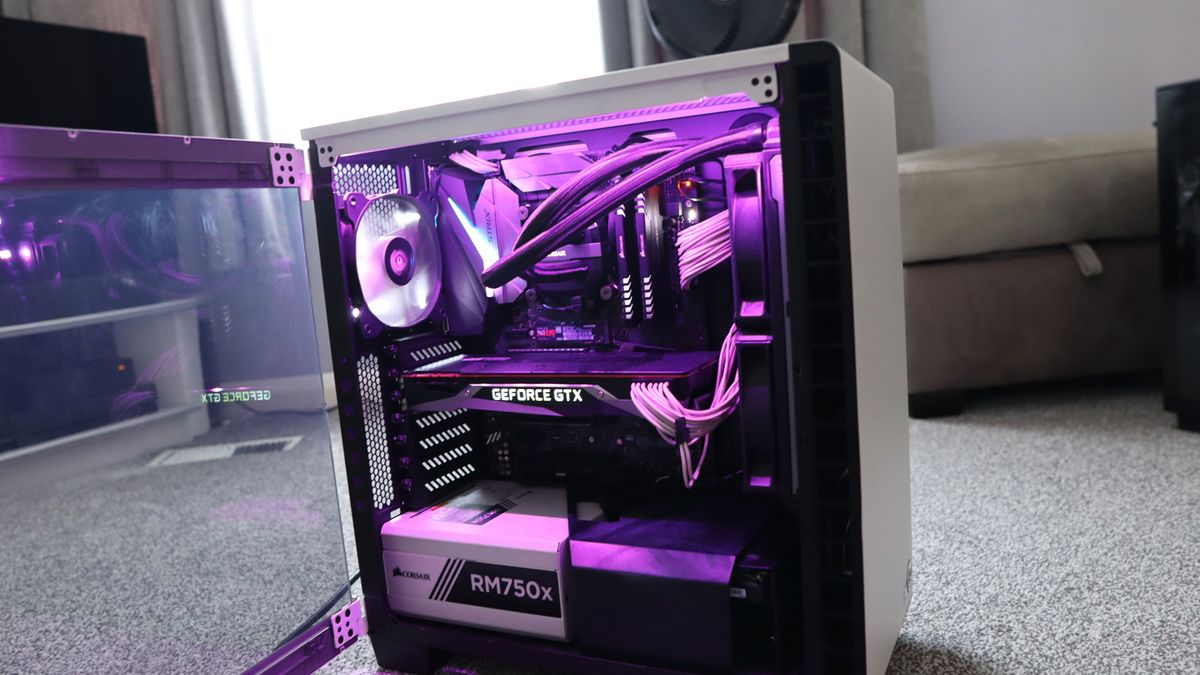
The Corsair Carbide 400C case garnered attention for offering a stylish yet low-RGB option, balancing aesthetics with functionality. The Asus ROG Strix motherboard added some flair while being robust enough for gaming demands.
(Image credit: Future)
How Does the 2017 System Stack Up Against 2026 Technology?
In an attempt to see how well the 2017 system performs in 2026, I pitted it against a modern rig equipped with the Nvidia RTX 5090. Here are the specs of my current dream system:
- CPU: AMD Ryzen 7 7800X3D
- Cooler: Noctua NH-D15
- GPU: Asus ROG Astral RTX 5090
- RAM: Corsair Vengeance 32GB (2x16GB) DDR5-6000 CL36
- SSD: Lexar NM790 4TB
- Motherboard: NZXT N7 B650E
- PSU: NZXT C1200 1200W 80+ Gold ATX 3.0
- Case: NZXT H9 Flow (2023)
This modern build has certainly set a high bar in performance, leading to inevitable comparisons with the older system.
Benchmarking Methodology
To gain insight into the performance differences, I ran each system through a variety of gaming and benchmark tests, utilizing a 4K QD-OLED monitor to explore performance limits at various resolutions: 1080p, 1440p, and 4K.
Performance in 2017-era Games
Starting with games from 2017, I tested the Scan system to establish a baseline performance. Notably, ‘Far Cry 5’, which was released in 2018, yielded impressive results.
At 1080p and on the Ultra preset, it averaged 113fps, dropping to 95fps at 1440p. At 4K, it still managed 50fps, a reasonably strong showing for a system of this age. For a point of reference, my modern rig scored 186fps at 4K, illustrating the advancements made over the years.
Meanwhile, the original ‘Dirt Rally’ also performed commendably, scoring 127fps and 126fps at 1080p and 1440p, respectively, showing that the i7-7700K was still holding its ground.

(Image credit: Ubisoft)
Modern Game Performance
Transitioning to contemporary titles, the performance profile of the older system begins to wane. In ‘Cyberpunk 2077’, often regarded as today’s performance benchmark, the GTX 1080 Ti only managed 52fps at 1080p.
By comparison, my RTX 5090 soared to 173fps at the same resolution. Notably, enabling DLSS technology on the modern card amplified performance even further.

(Image credit: CD Projekt Red)
Benchmark Comparisons
In synthetic benchmarks, the metrics are striking. The 7700K demonstrates adequate performance in single-core scenarios; however, issues arise in multi-threaded tasks, where the advancements of modern architecture show a drastic performance gap.
In 3DMark tests, the RTX 5090 leads by roughly three times in Fire Strike and nearly five times in Fire Strike Ultra at 4K, preserving the trend seen throughout various gaming titles.
| Header Cell – Column 0 | Intel Core i7-7700K + Nvidia GTX 1080 Ti FE | AMD Ryzen 7 7800X3D + Nvidia RTX 5090 |
|---|---|---|
Geekbench 6 | 1,643 (Single) | 2,691 (Single) |
Cinebench R23 | 1,204 (Single) | 1,763 (Single) |
3DMark Fire Strike | 19,076 | 55,465 |
3DMark Fire Strike Ultra | 6,241 | 30,553 |
3DMark Steel Nomad | 1,982 | N/A |
3DMark Time Spy | 7,785 | 31,075 |
3DMark Time Spy Extreme | 3,627 | 16,828 |
Conclusion: The Future vs. The Past
The comparison between these two systems offers a stark reminder of how drastically the gaming landscape evolves. In 2017, £1,700 secured an entire system with high-end specifications. By 2026, that price barely covers a single GPU. The performance differences are striking; the RTX 5090 far outpaces its predecessor in demanding titles.
Nonetheless, the older setup still holds its own in many gaming scenarios, proving the enduring quality and value of the GTX 1080 Ti. It remains capable of decent performance in its intended games, reflecting design confidence and longevity.
Ultimately, even though advancements in technology have repositioned older systems, the transformative capabilities of a good build remain remarkable. It’s a testament to hardware that can persevere through the cycles of innovation, keeping the spirit of gaming alive.
(Image credit: Future)
For more in-depth analysis and benchmarks, check out the full article here.
Image Credit: www.techradar.com


