


Why you can trust TechRadar
We spend hours testing every product or service we review, so you can be sure you’re buying the best. Find out more about how we test.
Lenovo Legion Tower 5: Two-minute review
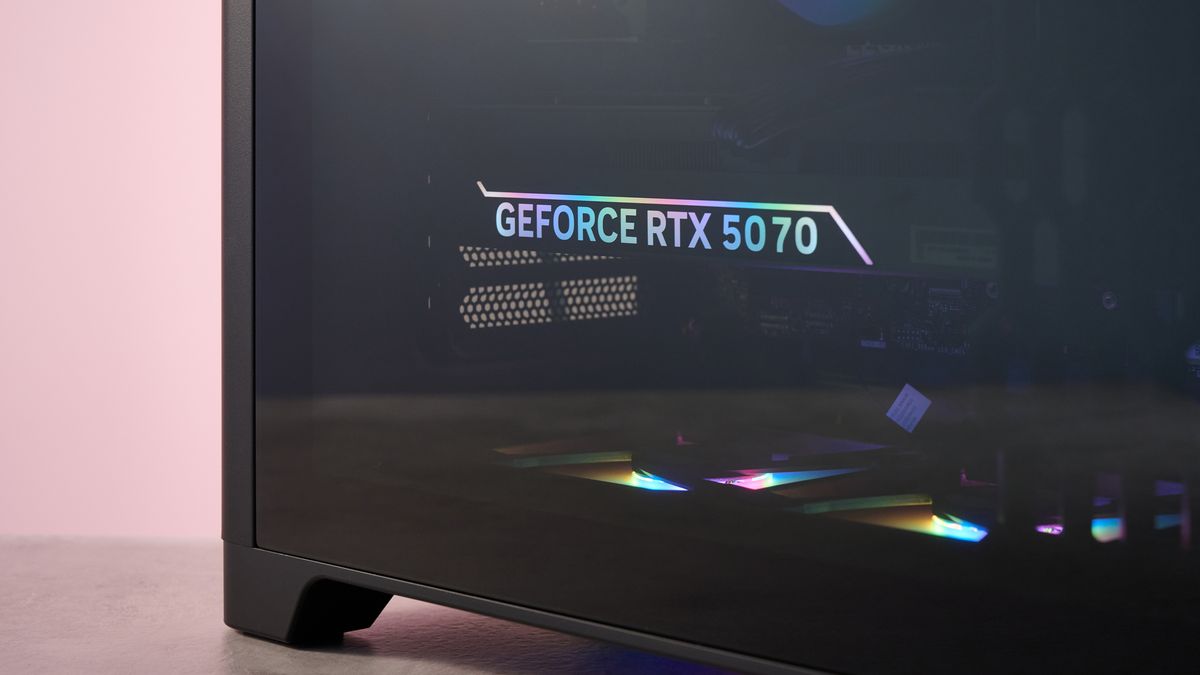
The Lenovo Legion Tower 5 is a high-end gaming PC with a formidable spec designed to handle modern games without sacrificing graphical fidelity.


Beyond aesthetics, the Legion Tower 5 boasts one of the best gaming PC cases due to its high build quality. Each material feels solid and durable, including the glass side cover.
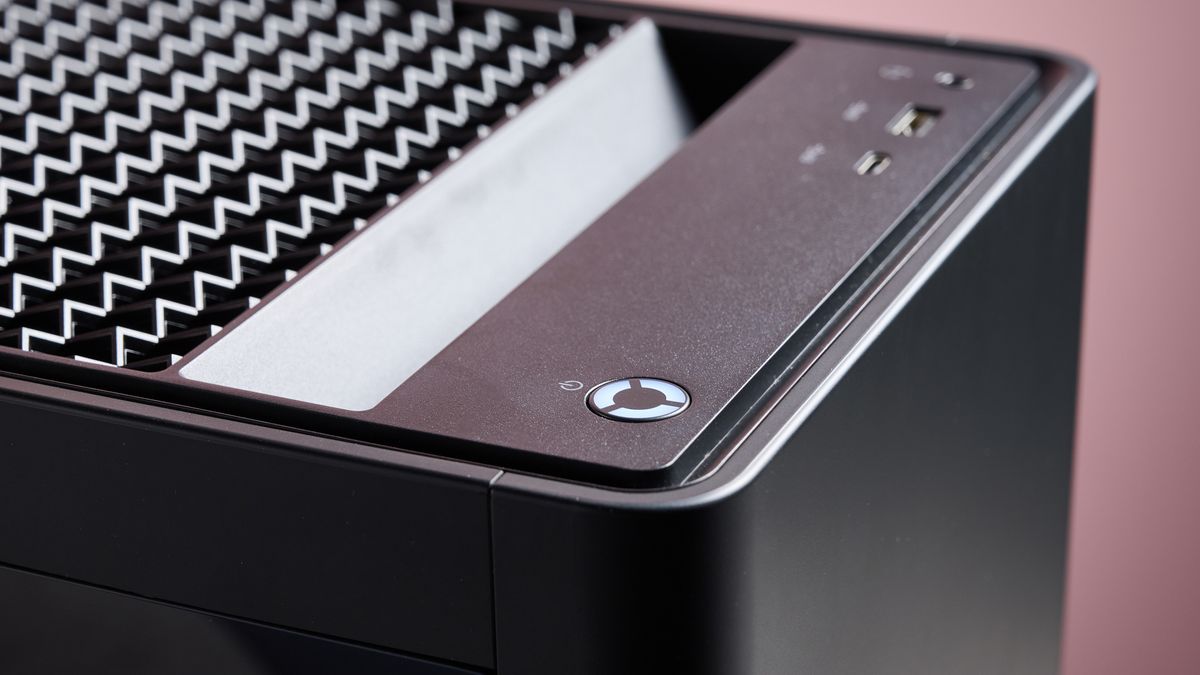
However, I found the top ventilation panel’s sharp undulating design uncomfortable to hold. Fortunately, there’s a grab handle at the front, which is essential given the considerable weight of the unit.
While the Legion Tower 5 does offer some expandability—with three M.2 drives and one HDD—there’s a limitation of 32GB RAM. There are also two spare SATA ports and one PCIe slot, but the overall options for upgrades are limited.
(Image credit: Future)
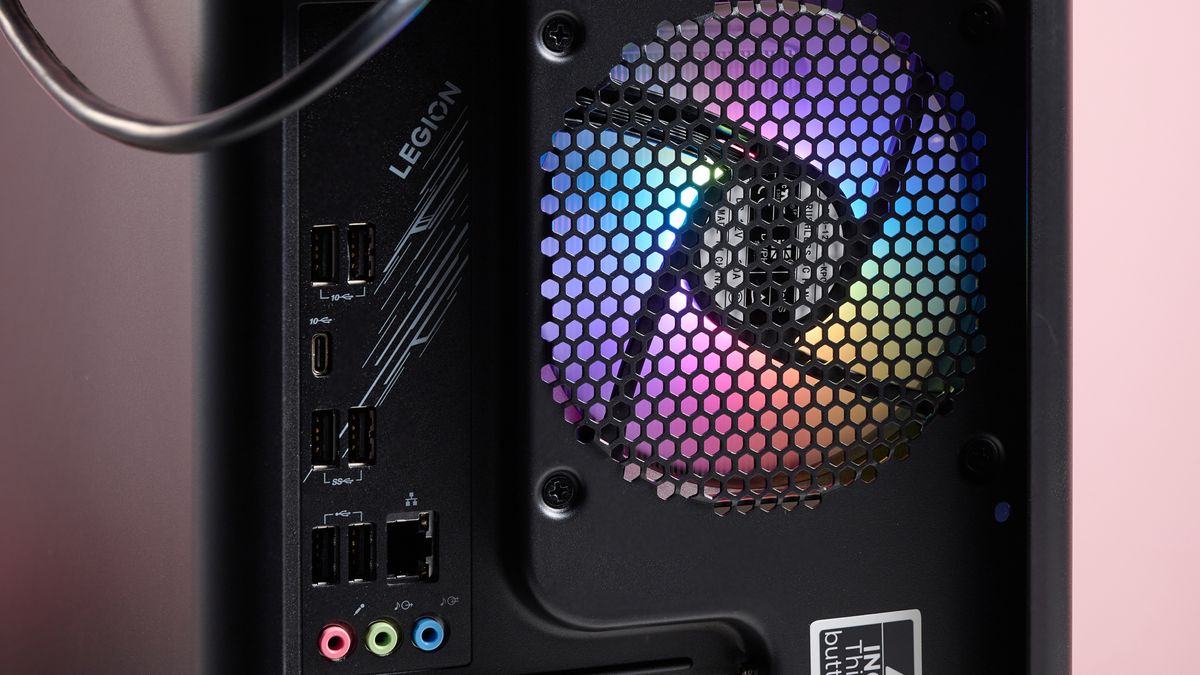
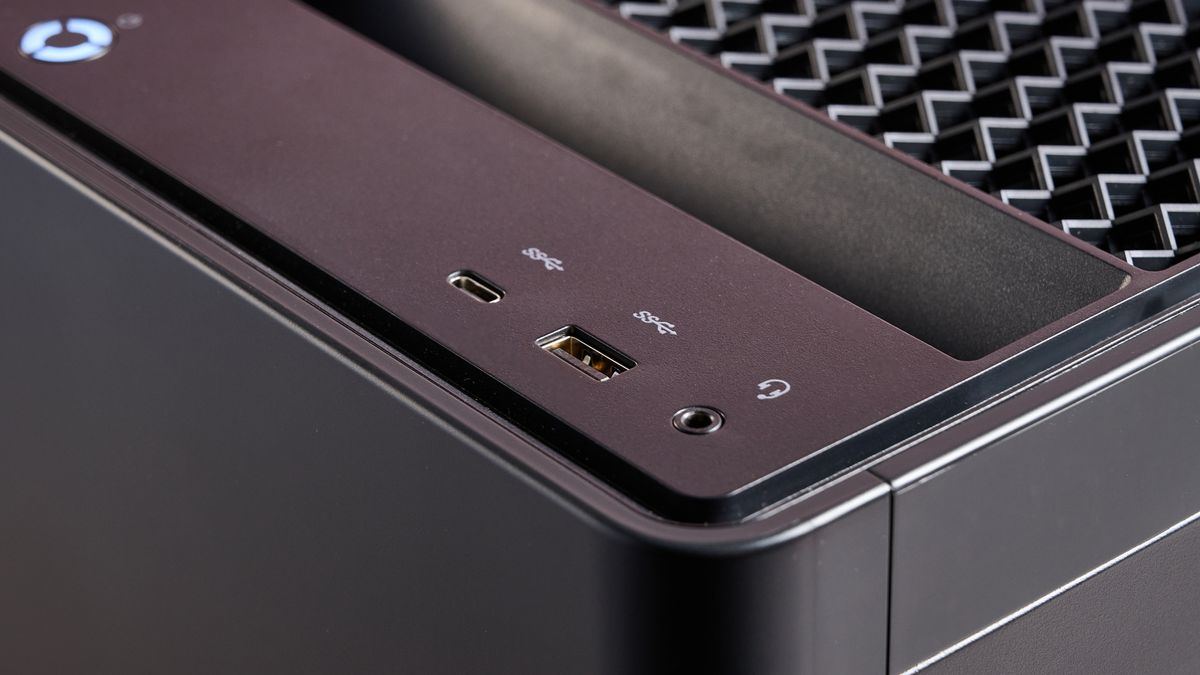
As for ports, the Legion Tower 5 does not disappoint, featuring plenty of USB-A and audio ports on the rear. However, the front panel is somewhat sparse, lacking a USB-C port, which may be a downside for some users.
Performance-wise, the Legion Tower 5 excels. It runs free from bloatware, and Lenovo’s bundled software is both unobtrusive and beneficial. Lenovo Vantage offers useful system functions, while LegionSpace allows for easy adjustments to performance settings and fan speeds.
Gaming with the Legion Tower 5 is an enjoyable experience. It easily runs AAA titles, often hitting fps figures in the hundreds, all while maintaining near silence and lukewarm temperatures.
While the quality and performance come at a price, it’s competitive compared to other high-end gaming PCs. Cheaper 5070 builds exist, but considering the quality of its case, components, and exceptional cooling abilities, the Legion Tower 5 may be worth the investment for gamers seeking top-tier performance without excessive noise.
Today’s best Lenovo Legion Tower 5 deals
Lenovo Legion Tower 5: Price & availability
(Image credit: Future)
- Starts from $1,449.99 / £1,395 / AU$2,069
- Available now
- Decent value
The Legion Tower 5 is currently available in the US, UK, and Australia, starting at $1,449.99 / £1,395 / AU$2,069 for AMD Ryzen 10th Gen builds. The Intel-based Tower 5i Gen 10 starts at $1,319.99 / £1,116 / AU$2,519.
AMD build configurations peak with a Ryzen 9 7950X3D and an RTX 5070 Ti, while Intel builds feature up to an Intel Core Ultra 7 265F along with an Nvidia RTX 5070 Ti. Maximum capacities for RAM and storage are 32GB and 2TB, respectively, though expansion is possible through additional drives aimed at enhancing storage capacity.
This price point reflects the performance and build quality offered, although cheaper alternatives such as the HP Victus 15L or HP Omen 16L are also available—though their specs may lag behind.
For those seeking similar performance, the NZXT Player PC closely competes in price and specifications, also featuring an RTX 5070.
Lenovo Legion Tower 5: Specs
(Image credit: Future)
CPU | AMD Ryzen 7 7800X3D (8 cores), 4.2GHz | |
Graphics | NVIDIA GeForce RTX 5070, 12GB | |
RAM | 32 GB DDR5-5600MT/s (UDIMM) – (2 x 16 GB) | |
Storage | 1TB NVMe M.2 SSD | |
Ports | Front I/O: 1x USB-A (5Gbps), 1x USB-C (5Gbps), 1x combo audio Back I/O: 1x RJ45, 1x USB-C (10Gbps), 2x USB-A (5Gbps), 4x USB-A (hi-speed USB), 3x audio | |
Wireless | Wi-Fi 6E, Bluetooth 5.3 |
Lenovo Legion Tower 5: Design
(Image credit: Future)
- Superb case
- Very heavy
- Limited expandability
The Legion Tower 5 leaves a positive first impression with its robust and elegantly designed case. The RGB lighting of the fans and front “Legion” logo enhances its appearance without being overbearing.
Constructed to a high standard, the materials feel premium and durable, with even the glass side cover exuding quality. However, its considerable weight may pose challenges for portability.
While the top vent’s spiked design can be uncomfortable to handle, a practical grab handle behind the front ports alleviates this issue.
There are some options for component expansion, though limited. Maximum capacities include three M.2 SSDs and one HDD, and while four DDR5 memory slots are available, only up to 32GB is supported.
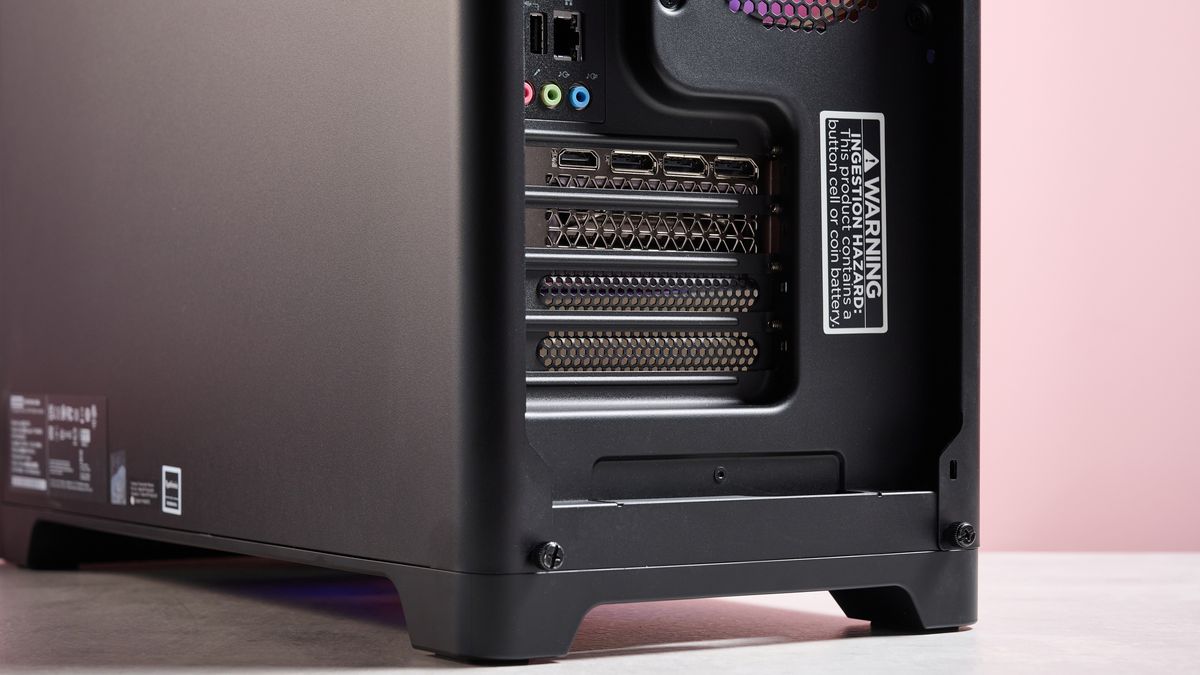
Typical ports are located on the rear, with six USB ports and essential audio connections. However, the front features only a couple of USB ports, one of which is type-C—a decision that may frustrate some users accustomed to using USB-A peripherals.
The included mouse and keyboard, while functional, are basic and not optimized for gaming, highlighting an area where Lenovo could enhance their offering.
Lenovo Legion Tower 5: Performance
(Image credit: Future)
- Excellent AAA performance
- Impressively cool and quiet
Benchmark | Score |
|---|---|
Geekbench 6.4 Single-core | 2,594 |
Geekbench 6.4 Multi-core | 13,554 |
Crossmark Overall | 1,846 |
Crossmark Productivity | 1,734 |
Crossmark Creativity | 2,127 |
Crossmark Responsiveness | 1,454 |
Cinebench R23 Single Core | 1,693 |
Cinebench R23 Multi Core | 17,376 |
Cinebench R24 Single Core | 104 |
Cinebench R24 Multi Core | 934 |
Throughout testing, the Legion Tower 5 provided excellent performance. The RTX 5070 in my review unit delivered impressive results, with everyday tasks handled efficiently. Document processing and spreadsheet tasks were instantaneous, while 4K streaming remained seamless without the buffering common in lesser machines.
Benchmarks | Score |
|---|---|
3DMark Fire Strike | 43,845 |
3DMark Steel Nomad | 5,495 |
3DMark Solar Bay | 107,638 |
3DMark Solar Bay Unlimited | 105,290 |
3DMark Speed Way | 5,960 |
3DMark Port Royal | 14,302 |
3DMark Wild Life Extreme | 43,652 |
3DMark Wild Life Extreme Unlimited | 42,947 |
Remarkably, even under heavy use, the Legion Tower 5 remained exceptionally quiet. Throughout my testing, the fans never exceeded a gentle hum, even when pushed into Performance mode.
In terms of cooling, the unit did not exceed lukewarm temperatures, relying entirely on air cooling through six fans that deliver up to 180W of power, proving to be extremely effective.
Game | Average FPS |
|---|---|
Cyberpunk 2077 (1080p, Ultra) | 72 |
Shadow of the Tomb Raider (Highest, 1080p) | 208 |
F1 2024 (Max, 1080p) | 119 |
Total War: Warhammer III (Ultra, 1080p) | 172 |
With no bloatware holding it back, the Legion Tower 5 offers a seamless experience bolstered by two helpful utility applications, LegionSpace and Lenovo Vantage, which facilitate system performance and fan management.
The Wi-Fi card also performed impressively, with stable connection speeds and no noticeable dropouts, ensuring an uninterrupted online gaming experience.
Should I buy the Lenovo Legion Tower 5?
(Image credit: Future)
Attributes | Notes | Rating |
|---|---|---|
Value | The Legion Tower 5 is expensive, but the value is good considering the performance and build quality. | 3.5 / 5 |
Design | The case feels very premium and durable, although it’s very heavy. It’s not the most expandable, either. | 4.5 / 5 |
Performance | The Legion Tower 5 tears through AAA titles without breaking a sweat. It’s also eerily quiet. | 5 / 5 |
Average rating | The Legion Tower 5 is a top-tier gaming desktop that delivers superb gaming performance. It’s large and heavy, and not the most expandable, but the premium design and its hushed operation might justify its cost. | 4.34 / 5 |
Buy it if…
Don’t buy it if…
Lenovo Legion Tower 5: Also Consider
Here are some equally desirable alternatives to the Lenovo Legion Tower 5:
How I tested the Lenovo Legion Tower 5
- Tested for two days
- Used for gaming and benchmarked
- Plentiful PC gaming experience
During my testing of the Legion Tower 5, I employed it for various tasks including work, entertainment, and gaming. I engaged with AAA titles like Cyberpunk 2077 on the highest graphics settings, while also running a series of benchmarks courtesy of TechRadar.
With over a decade of PC gaming experience and familiarity with various systems and components, I brought my extensive background to the evaluation of this gaming rig.
For additional insights, click Here.
Image Credit: www.techradar.com


